

[ad_1]
This Law School Review has been shared anonymously.
Name
Anonymous
Full name of your college
Kashmir Law College
Full address of the college
Kashmir Law College, TawheedAbad, Noushera, Srinagar, Jammu and Kashmir 190011
Tell us about the infrastructure of your law college
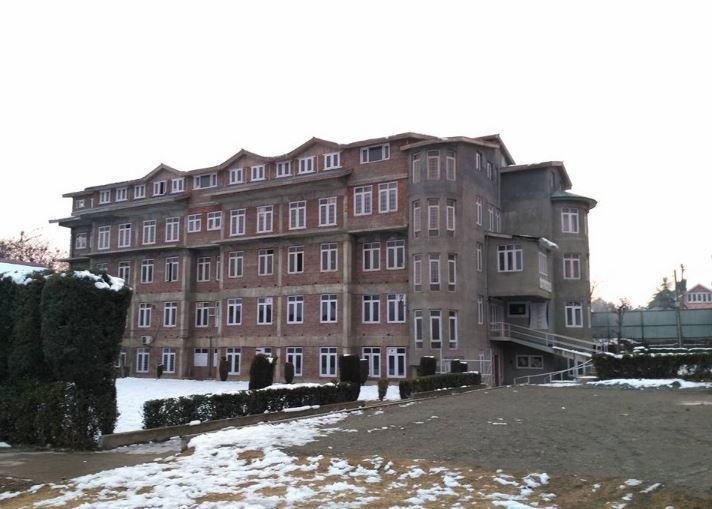
Kashmir Law College offers a fairly conducive academic environment, with the following key infrastructure features:
- Classrooms – The college has standard classrooms with adequate seating and basic teaching aids like whiteboards and projectors. However, digital infrastructure could be improved.
Rated: 3.5/5 - Library – The library is decently stocked with core legal texts, journals, and bare acts. It offers a quiet study environment, though online databases and research access are limited.
Rated: 3.5/5 - Sports Facilities – Sports infrastructure is minimal, with only basic access to outdoor games like cricket and football. Indoor or gym facilities are not well-developed.
Rated: 2.5/5 - Hostel Rooms – Hostel accommodation is available for both boys and girls, though the number of rooms is limited. Basic amenities like food, water, and heating are present, but overall comfort and maintenance could be improved.
Rated: 3/5
Overall Rating: 3.2/5
The infrastructure at Kashmir Law College meets most academic needs but has scope for enhancement in terms of modernization, sports, and digital resources.
How are the academic culture and faculty in your college?
- Number of Faculty – The college has a modest number of faculty members, with each core law subject generally having a dedicated lecturer. However, the student-to-faculty ratio could be improved.
Rated: 3/5 - Quality of Faculty – Faculty members are generally knowledgeable and supportive. A few are practicing advocates, which brings practical insights into classroom discussions. However, research output and modern pedagogical techniques are somewhat limited.
Rated: 3.5/5 - Attendance Policy – Attendance is moderately enforced. While the college follows university norms requiring minimum attendance for exam eligibility, it is not extremely strict daily.
Rated: 3/5 - Class Timings – Classes typically run from morning to early afternoon, following a standard law college schedule. Timings are consistent and allow students to pursue internships or self-study post classes.
Rated: 4/5
Overall Rating: 3.3/5
The academic culture is disciplined yet flexible, and the faculty is approachable and sincere, though there is scope for more advanced teaching methods and greater academic engagement.
How’s the peer quality in your college? Rate it on a scale of 5 with 1 being the lowest and 5 being the highest.
The peer quality at Kashmir Law College is diverse and moderately competitive. Students come from various backgrounds across the Valley, with a mix of those genuinely interested in law and others pursuing the course for broader career options like civil services or the judiciary.
- Engagement: A good number of students actively participate in moot courts, debates, and internships, though the overall academic competitiveness is moderate.
- Supportiveness: Peer interaction is generally positive, with a culture of mutual help and collaboration rather than cut-throat competition.
- Exposure: Since the college is relatively smaller and regionally focused, peer exposure to national-level competitions or networks is limited unless self-driven.
Rated: 3.2/5
Tell us about the co-curricular and extra-curricular activities
- Co-curricular Activities – The college organizes moot court competitions, legal aid camps, and seminars on contemporary legal issues. However, these activities are conducted occasionally rather than on a regular or structured basis.
Rated: 3/5 - Clubs and Societies – There are a few active committees like the Moot Court Committee and Legal Awareness Cell, but formal student-run clubs (e.g., debate society, cultural club) are limited or underdeveloped.
Rated: 2.5/5 - Festivals and Events – The college conducts small-scale cultural and legal fests, but these are not very frequent or large in scale. Social events are modest and usually tied to academic observances or legal awareness days.
Rated: 2.5/5 - Social Life – The social environment is respectful and friendly. While the college doesn’t have a very vibrant campus life like national law universities, students form close-knit communities.
Rated: 3/5
Overall Rating: 2.8/5
How are the placements in your college?
- Placement Cell – The college currently does not have a formal placement cell, which affects organized campus recruitment. Students have to rely on their own efforts and networks for internships and job opportunities.
Rated: 1.5/5 - Internships – Many students secure internships independently through personal contacts or by applying to local law firms, courts, NGOs, and government offices. A few manage to intern with reputed national firms or under senior advocates, especially during vacations.
Rated: 3/5 - Job Placements – On-campus job placements are rare. Students generally pursue litigation, judiciary preparation, civil services, or LL.M. after graduation. Some also join NGOs or legal research organizations.
Rated: 2.5/5 - Career Guidance – There is limited structured career counseling, so students who are proactive tend to do better in securing good opportunities.
Overall Rating: 2.3/5
How are the hostels in your college?
Currently, the college has no hostels.
What are the best things you like about your college?
Supportive Faculty – The faculty is approachable, especially in core legal subjects. Some professors also provide mentorship beyond the classroom, which is valuable for both academics and career planning.
Peaceful Environment – The college offers a calm and scenic atmosphere, ideal for focused study. The campus maintains a sense of discipline and safety, contributing to a positive student experience.
Strong Local Legal Network – Being situated in Srinagar, the college has access to local courts, legal aid camps, and public service opportunities, giving students a practical edge, especially if they engage proactively.
Affordability – Compared to many private law schools in India, Kashmir Law College is affordable, making quality legal education accessible to a broader section of students from the region.
Close-knit Peer Culture – The relatively small student body fosters personal connections, collaboration, and mutual support, particularly helpful during internships, moot courts, and exam preparation.
In your opinion, what are bad things about your college?
No Placement Cell – The absence of a dedicated placement or career guidance cell is a major drawback. Students are left to secure internships and jobs on their own, which can be challenging without structured institutional support.
Limited Co-curricular Activities – A lack of regular moots, debates, workshops, and student-run societies limits overall exposure and the development of essential skills outside the classroom.
Outdated Infrastructure – While basic facilities are available, classrooms, library resources, and digital tools require significant modernization to meet current legal education standards.
Less National Exposure – The college has limited connections with national-level institutions, law firms, or moot court circuits, which may restrict ambitious students from accessing wider professional platforms.
Inconsistent Academic Engagement – Although some faculty members are committed, the overall academic rigor and research culture need improvement. More seminars, paper presentations, and legal writing initiatives would enhance the learning environment.
Anything else you want to share?
When I qualified for the BA LL.B program through the Kashmir University Entrance Examination, my dream had been to join a National Law University. Unfortunately, I couldn’t make it, and transitioning to Kashmir Law College was difficult. There were no orientation sessions, no career counseling, and no structured guidance. I felt confused and directionless, unsure of where my legal career was heading.
The college environment was quite basic; we attended classes regularly, but exposure to opportunities was limited. Compared to NLUs, we lacked infrastructure, co-curricular activities, and professional avenues. It felt like I was navigating my law school journey in isolation.
Things changed for me in my second year when I stumbled upon Lawctopus. What began as curiosity soon became a turning point. By my third year, I was actively using the platform and it completely reshaped my perspective.
I learned about internships, legal NGOs, and how to build a professional profile. Thanks to the guidance and resources on Lawctopus, I’ve completed multiple internships that have given me real-world experience and confidence in my path.
Now, I truly believe that being selected as a Lawctopus Campus Leader would be a significant opportunity, not just for me, but for the entire student community in Kashmir. Many law students here remain unaware of platforms like Lawctopus and lack access to structured guidance. I want to be a bridge, promoting legal awareness, career opportunities, and internships both within my college and across the region.
Kashmir faces unique challenges, but it also has immense untapped potential. Initiatives like this can empower students, help them connect with the broader legal community in India, and inspire a more informed and ambitious legal culture.
How would you rate your college overall on a scale of 10?
6/10
Are you interested in sharing your Law School Review with the community? Click here to submit your Law School Review today on Lawctopus.

Disclaimer: Law School Experiences are opinions shared by individual law students and tend to be personal and subjective in nature. The law school experiences shared on Lawctopus are NOT Lawctopus’ official views on the law school. We also do not edit law school experiences (except to ensure readability) to ensure that the author’s voice remains intact.
[ad_2]
Source link