

[ad_1]
Interview conducted by Sakshi Tripathi as a part of her Campus Leaders Program.
Please introduce yourself to our readers
Introducing oneself, I believe, is quite a task. Anyone would definitely exaggerate things and would probably (well, definitely) be a bit biased. Reflection upon oneself is not easy. Having said that, I’ll try my best to be fair and marshal the facts as they are.
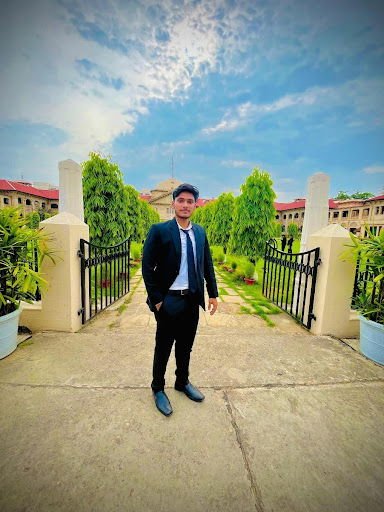
Hello there, readers! I’m Deepak Kumar Gupta, a final-year B.A. LL.B. student at United University, Prayagraj, and a passionate judiciary aspirant. I come from a background where the value of law is not just understood in theory, but felt in everyday life—where justice, sometimes delayed or denied, shaped my very understanding of right and wrong.
My journey toward judicial services is more than just an academic pursuit; it’s rooted in a desire to serve with fairness, patience, and integrity. I’ve always been inclined towards reading, writing, and reflecting—qualities I believe are essential for any future judge. While the preparation is intense and often overwhelming, it has also been deeply transformative.
Through this experience, I hope to not just pass an exam, but evolve into someone who can contribute meaningfully to the justice system.
When did you first decide to pursue the judicial services, and what motivated that choice?
The idea of becoming a judge took root in my second year, when I interned under a civil judge. The way they handled matters—with patience, clarity, and a sense of justice—deeply inspired me.
It was then I realised that the judiciary wasn’t just a prestigious position, but a platform to ensure dignity and fairness for every citizen.
Many students are confused between litigation, corporate law, and judiciary. How did you decide judiciary was the right path for you?
Honestly, I went through that confusion too. I interned with a few litigators and even sat through corporate webinars. They all had their charm, but something always felt missing. For me, the idea of being a silent but powerful pillar of justice—away from the chaos and competition—was more meaningful.
The judiciary appealed to my temperament. I’m someone who enjoys reading deeply, analyzing logically, and thinking independently. I don’t enjoy aggressive debates as much as I enjoy quiet contemplation. That self-awareness helped me make my decision.
What was your overall preparation strategy? Did you follow a fixed timetable, or was your approach more flexible?
At first, I tried rigid timetables, but they didn’t work for me. I would end up feeling guilty when I couldn’t follow them perfectly. Eventually, I shifted to a goal-based system. Instead of saying “Study from 9 to 11,” I’d say “Finish 30 pages of CPC today.”
I broke the syllabus into manageable parts—bare acts, case laws, commentaries, and previous years’ papers. Every week, I would revise at least two subjects and one topic from general studies or current affairs.
Flexibility worked better. It gave me room for revision, breaks, and the occasional off day without derailing my preparation.
Which subjects did you find most challenging during your preparation, and how did you overcome those difficulties?
IPC and CrPC were overwhelming initially because of their vastness and interrelated sections. What helped me was chart-making and color-coded notes. I started connecting sections like a map instead of reading them in isolation.
Also, the Indian Evidence Act felt abstract in the beginning. To deal with that, I watched YouTube lectures and read courtroom judgments to see how the principles are actually applied. That changed everything—it went from theory to real-world logic.
Did you join a coaching institute or prepare on your own? What would you recommend to others based on your experience?
I joined an online coaching platform for foundational guidance. It helped me understand how to approach the syllabus. But after the first six months, I switched to self-study using bare acts and standard books.
My suggestion? If you’re disciplined and can stick to a plan, self-study is enough. But if you’re just starting out or feeling lost, a coaching institute can help you structure your time and resources.
Just don’t become over-dependent on coaching. The final preparation is always self-driven.
Can you share the key books, notes, or online resources that helped you most during your preparation?
Absolutely. Here’s what I personally relied on:
- Bare Acts: Your best friend. Read them at least 4–5 times.
- Books:
- IPC – K.D. Gaur
- CPC – C.K. Takwani
- CrPC – R.V. Kelkar
- Indian Evidence Act – Batuk Lal
- Online Resources:
- Lawflix Judiciary
- LegalEdge YouTube
- Daily current affairs from GKToday
- Case Law: I made my own mini-case law compendium for quick revisions.
How important were mock tests and answer writing practice in your preparation? What was your approach to evaluating your progress?
Very important. I learned this the hard way.
In my early months, I avoided writing answers because I thought, “I’ll do it after I finish the syllabus.” Big mistake. When I finally started mocks, I realised how different it is to write law versus read law.
I took at least one mock every weekend. I evaluated myself using past toppers’ copies and by comparing answers with friends. With time, my writing became more structured—introduction, legal provisions, case law, application, conclusion.
Also, speaking answers aloud helped me for the viva-voce round.
Preparation for judiciary exams can be mentally taxing. How did you stay motivated during tough times, especially after setbacks or failures?
There were days I wanted to give up—especially when mock scores were low or when others seemed way ahead. What helped me most was reminding myself why I started.
I also took small breaks—watched cricket, spent time with friends, wrote in a journal. I talked to seniors who had cleared the exam—they made me believe it’s possible if I stay consistent.
One trick I used: I wrote a letter to my “future self”—the day I become a judge. That letter still hangs on my wall. It reminds me that all this effort has a purpose.
Did you ever feel like giving up? If so, what pulled you back and kept you going?
Yes, many times. Once, I even doubted whether I was “cut out” for this. It’s a tough journey, especially when results take years and you’re sacrificing youth while your peers take jobs or start earning.
But each time I felt like giving up, I would visit the District Court in Prayagraj. Just sitting in the courtroom, observing how justice unfolds, gave me a sense of peace and purpose.
Also, I’m lucky to have supportive friends and family who always reminded me, “Deepak, if not you, then who?”
What is one piece of advice you wish someone had given you at the beginning of your preparation? What should fresh aspirants not do while preparing?
One piece of advice I wish I had received earlier is: “Don’t study for the exam, study for the courtroom.”
Focus on conceptual clarity. Stop mugging up coaching notes blindly. Understand why the law is the way it is.
And please, don’t compare your journey to others’. Everyone has a different pace, background, and timeline. Some clear in the first attempt, some in the fourth. Both are worthy.
Just stay consistent, stay honest, and trust the process. The judiciary is not just an exam. It’s a transformation.
Disclaimer: Interviews published on Lawctopus are not edited thoroughly so as to retain the voice of the interviewee.
This interview is a part of our Star Interview series, conducted by the Campus Leaders at Lawctopus. Stay tuned for more!

[ad_2]
Source link