

[ad_1]
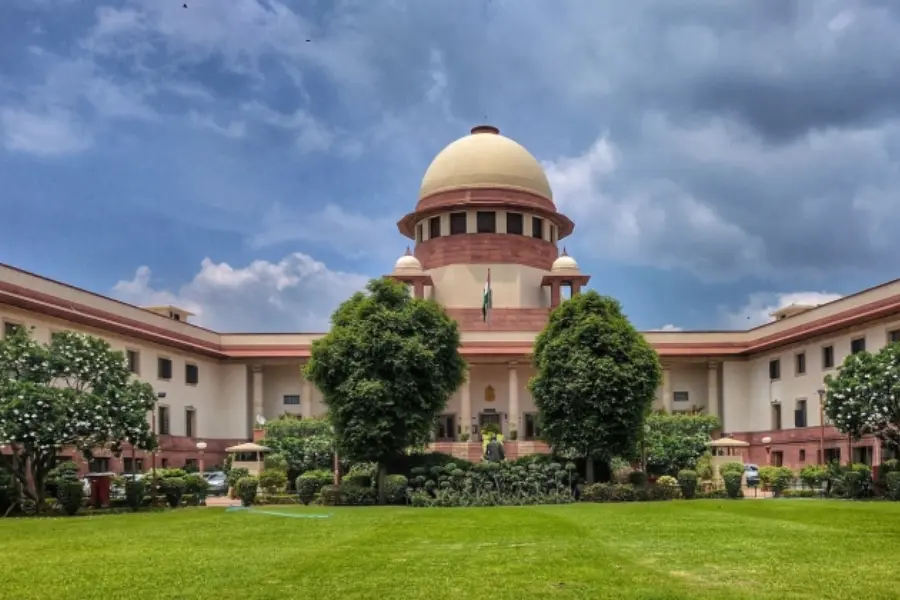
The Supreme Court has issued notice on a Public Interest Litigation (PIL) that seeks the formation of a Legal Education Commission to evaluate the structure and duration of law degree programmes in India. The PIL has been filed by Advocate Ashwini Kumar Upadhyay, who raised concerns over the five-year integrated LL.B and two-year LL.M courses currently in place.
A Bench of Justice Surya Kant and Justice Joymalya Bagchi directed the Central Government, Bar Council of India (BCI), University Grants Commission (UGC), and Law Commission of India to file their responses. The matter is scheduled to be heard on September 9, 2025.
What the Petition Argues
The petitioner in Ashwini Kumar Upadhyay V. Union of India and Ors submitted that the current legal education model is not aligned with the National Education Policy (NEP) 2020, which promotes four-year undergraduate courses across disciplines. He alleged that the extended duration of law programmes is financially burdensome and was designed to benefit private law colleges.
“The structure seems driven more by commercial interests than academic need,” Upadhyay argued, claiming that exorbitant fees in law colleges, especially private institutions and some NLUs, make legal education unaffordable for many deserving candidates.
Proposal for Legal Education Commission
The PIL requests the Court to direct the Central Government to set up a Legal Education Commission or an expert panel that includes jurists, retired judges, legal scholars, and senior advocates. The aim is to comprehensively review the course content, teaching methods, and duration of LL.B and LL.M programmes.
The petition also makes a broader point: rigid academic timelines can discourage early legal practice. It cites examples of legal legends like Ram Jethmalani, who began his career at 17, and Fali Nariman, who earned his degree at 21.
Focus on Accessibility and Affordability
Upadhyay argued that students from economically weaker backgrounds struggle with the current course duration and fee structure. He stated that five years for a law degree, followed by two more for an LL.M, delays career entry and increases financial pressure.
He questioned why legal education lacks a dedicated regulatory body, unlike the National Medical Commission for medical education or AICTE for technical courses.
What Happens Next?
The Court will revisit the matter on September 9, after all parties have submitted their responses. The outcome could potentially reshape the regulatory and academic framework of legal education in India.

Attention all law students!
Are you tired of missing out on internship, job opportunities and law notes?
Well, fear no more! With 2+ lakhs students already on board, you don’t want to be left behind. Be a part of the biggest legal community around!
Join our WhatsApp Groups (Click Here) and Telegram Channel (Click Here) and get instant notifications.
[ad_2]
Source link